
The United States announced a 25 per cent tariff on India as the White House released an expansive list of duties that Washington, DC will impose on exports from countries around the world.

The finance ministry is considering a suggestion by the Commerce Ministry to enhance duty neutralisation rates to make up for revenue lost by exporters due to sharp appreciation in the rupee.

The Russians have termed Putin's visit to India, his first to this country since the outbreak of the Russia-Ukraine war, as 'Druzhba Dosti', which means 'friendship' in Russian and Hindi respectively.

India's exports rose by 43 per cent to $35.65 billion in October while trade deficit widened to $19.73 billion during the month, according to the official data released on Monday. Imports soared by 62.51 per cent to $55.37 billion, widening the trade deficit. Export sectors which recorded positive growth during October include petroleum, coffee, engineering goods, cotton yarn/fabs./made-ups, gems and jewellery, chemicals plastic and linoleum and marine products, the data showed.

After contracting for six months in a row, the country's exports grew by 5.27 per cent to $27.4 billion in September, Commerce and Industry Minister Piyush Goyal said on Thursday.

After the first quarter was washed out, exporters are now keeping their fingers crossed over a turnaround in outbound shipments to at least North America from September onwards. This comes even as other key destinations such as Europe may take longer to revive in FY24. Slowdown in key economies, as well as geopolitical tensions resulted in sluggish demand for Indian goods.
Subdued demand from developed countries and blocs like the US and EU is impacting exports of key sectors including engineering, gems and jewellery and may have implications on India's exports in case the global situation does not improve in coming months. Global inflation, Russia-Ukraine war, simmering China-Taiwan crisis and supply disruptions are hurting economic growth worldwide, leading to poor demand, experts say. The world merchandise trade volume is expected to grow 3 per cent in 2022 against the earlier forecast of 4.7 per cent, mainly due to the ongoing war between Russia and Ukraine, according to the World Trade Organization forecast, released in April.

The country's exports contracted for the 11th straight month in August by 19.7 per cent, as demand for merchandise goods saw a sharp erosion in the developed countries which mainly feed India's external trade. The shipments in August were valued at $14.3 billion, down from $17.8 billion in the same month last year, commerce secretary Rahul Khullar said on Thursday.

During 2013-14, total value of exports stood at $465.90 billion.

The escalation of conflict in the West Asian region is expected to push already high logistics costs besides hurting trade in sectors such as oil, electronics and agriculture, according to exporters. They said that insurance costs for exports to the countries directly involved in the war could also go up, which will impact Indian exporters' working capital. Think tank Global Trade Research Initiative (GTRI) stated that the conflict is already hurting India's trade with countries like Israel, Jordan, and Lebanon.

After dipping by as much as 17 per cent in April, readymade garment (RMG) exports of all textile categories in India are showing signs of recovery in May. Exporters in Tiruppur are indicating a rise in rupee terms during the month, while it may take at least a month for volumes to be back in positive terrain. Among the global majors that are placing orders in the textile hub include Walmart, H&M (Hennes & Mauritz AB), Tommy Hilfiger and Target.
India's exports rose by 22.36 per cent to $33.81 billion in February on account of healthy growth in sectors like engineering, petroleum and chemicals, even as the trade deficit widened to $21.19 billion, according to preliminary data released by the commerce ministry on Wednesday. Imports during the month too jumped by about 35 per cent to $55 billion, with inbound shipments of petroleum and crude oil surging 66.56 per cent to $15 billion. The trade deficit -- the difference between imports and exports -- stood at $13.12 billion in February 2021.

'Just as we cannot surrender the interests of our farmers and dairy industry, Trump is also looking for markets for the produce of the farmers in the Midwest, which are his support base.'
India's exports entered negative territory after a gap of about two years, declining sharply by 16.65 per cent to $29.78 billion in October, mainly due to global demand slowdown, even as trade deficit widened to $26.91 billion, according to data released by the commerce ministry on Tuesday. Key export sectors, including gems and jewellery, engineering, petroleum products, ready-made garments of all textiles, chemicals, pharma, marine products, and leather, recorded negative growth during October. Imports during the month under review rose by about 6 per cent to $56.69 billion on account of increase in the inbound shipments of crude oil and certain raw materials such as cotton, fertiliser and machinery.
India's exports rose by 2.14 per cent to $36.27 billion in July while the trade deficit almost tripled to $30 billion during the month due to over 70 per cent rise in crude oil imports, according to official data released on Friday. Imports shot up by 43.61 per cent to $66.27 billion in the month compared to July 2021, the data showed. The trade deficit was $10.63 billion in July 2021.

India's trade deficit with Russia continued to widen for the second consecutive year to $57 billion in the financial year 2023-24 (FY24), with Moscow becoming New Delhi's largest source of crude oil imports. All eyes will now be on Prime Minister Narendra Modi's visit to Russia during July 8-9, where he is set to meet President Vladimir Putin. This will be Modi's first visit to the Kremlin since the Russia-Ukraine conflict began over two years ago.
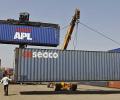
India's exports to China have increased by 16.15 per cent to USD 20.87 billion in 2020 from USD 17.9 billion in the previous year on account of healthy growth in the shipments of ores, iron and steel, aluminum and copper, according to the data of the commerce ministry.

India on Monday imposed a 12 per cent provisional safeguard duty for 200 days on five steel product categories, including hot rolled coils, sheets and plates, to protect domestic players from surge in imports. The decision follows a recommendation for the same by the Commerce Ministry's investigation arm DGTR. Last month, the DGTR suggested to impose the duty.

'We have to be prepared for the larger disruption that is likely to take place.'

The steep depreciation of rupee will not give an immediate advantage to the country's exporters.
India's exports recorded a flat growth of 0.59 per cent to $31.99 billion in November, even as trade deficit widened to $23.89 billion during the month, according to the data released by the government on Thursday. Exports stood at $31.8 billion in November last year. Imports rose by 5.37 per cent to $55.88 billion in November as compared to $53.03 billion in the corresponding month a year ago, the data showed. During April-November 2022, exports rose by 11 per cent to $295.26 billion as against $265.77 billion in the same month last year.

The Union government will soon make amendments to the foreign trade policy (FTP) to enable exporters to claim export benefits for settling trade in rupees. These benefits are, so far, available for export payments received in foreign currencies. After the Reserve Bank of India (RBI) unveiled a mechanism to settle international trade transactions in the local currency on Monday, exporters have been demanding that the Ministry of Commerce and Industry come up with a clarification on the matter.

As sanctions-hit Russia increasingly relies on consumer products from India, outbound shipments to Russia have started picking up for the second consecutive month in October. This comes after it witnessed contraction for six consecutive months starting March, commerce and industry ministry data showed. During October, India exported goods worth $280 million, up 3.7 per cent as compared to a year ago. It was led by demand for items such as vegetables, tea, coffee, chemicals as well as iron and steel products.
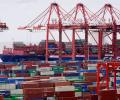
The country's exports for the first time crossed the $400 billion mark in a fiscal on healthy performance by sectors such as petroleum products, engineering, gems and jewellery, and chemicals, according to the commerce ministry's data released on Wednesday. The merchandise exports rose by by 37 per cent to $400.8 billion in 2021-22 until March 21 against $292 billion in 2020-21. Previously, the outbound shipments had touched a record of $330.07 billion in 2018-19.

With Kabul falling into the hands of the Taliban, bilateral trade between Afghanistan and India will get impacted significantly in these uncertain times, according to exporters. Federation of Indian Export Organisations (FIEO) director general Ajay Sahai said domestic exporters should follow caution looking into the political development in Afghanistan, particularly with regard to payments, for which adequate credit insurance may be availed by them. "The trade will be impacted. It would reduce due to the growing uncertainty in Afghanistan," he said on Monday. Former FIEO president and country's leading exporter S K Saraf too said there will be a significant fall in the bilateral trade.

I'...additional concessions, such as opening government procurement, reducing agricultural subsidies, weakening patent protections, and allowing unrestricted data flows -- demands India has resisted for decades.'
India's merchandise exports rose by 22.63 per cent year-on-year to $33.79 billion in September on better performance by key sectors like engineering goods and petroleum products, according to official data released on Thursday.
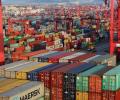
The country's exports jumped by 58.23 per cent to $34 billion in March as key sectors such as engineering, gems and jewellery and pharmaceuticals recorded healthy growth rate during the month, according to the Commerce Ministry's provisional data. Exports during April-March 2020-21, however, dipped by 7.4 per cent to $290.18 billion compared to $313.36 billion in 2019-20, the data showed. Imports during 2020-21 contracted by 18 per cent to $388.92 billion compared to $474.71 billion during 2019-20. In March 2020, the exports stood at $21.49 billion, which was a decline of about 34 per cent over March 2019 due to global slowdown induced by the Covid-19 crisis.

Domestic exporters may soon start shipments of mangoes, such as 'Dasheri' and 'Langda', to the US as America will start accepting testing certificates of specified agencies of India, a senior government official said on Tuesday. India has not exported mangoes to the US for the last two years. The set protocol involves the arrival of the US phytosanitary inspector, who monitors the process, which is called pre-clearance operations before exports. They have not visited India during the summer of 2020 and 2021.

India's exports to EU and Britain stood at $35.35 billion and $9.35 billion in 2015-16, respectively
Uncertainty looms over India's export outlook, with the new Covid-19 variant Omicron spreading rapidly across the country's key shipment destinations. With the US and parts of Europe witnessing more than 100,000 Covid-19 cases a day, exporters expect some disruption. However, there may not be an immediate decline in exports from India because the order books remain strong at least for the next few weeks, they said.

India's exports are expected to touch $360 billion in the current fiscal from $312.35 billion in 2013-14, Federation of Indian Export Organisations (FIEO) said.
India's exports in January rose 25.28 per cent to $34.50 billion on account of healthy performance by mainly engineering, petroleum and gems and jewellery sectors, even as trade deficit widened to 17.43 billion, according to data released by the commerce ministry on Tuesday. Imports grew by 23.54 per cent to $51.93 billion during the month under review. Trade deficit, difference between imports and exports, stood at $14.50 bn in January 2021.

India's exports increased 3.79 per cent to $26.75 billion in January, helping the trade deficit to narrow to $9.92 billion.
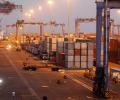
After recording positive growth for two months in a row, India's exports dipped marginally by 0.25 per cent to $27.67 billion in February and trade deficit widened to $12.88 billion, according to preliminary data released by the government on Tuesday. Imports grew 6.98 per cent to $40.55 billion during the month, the data showed. The trade deficit stood at $10.16 billion in February 2020. Exports during April-February 2020-21 were $255.92 billion, compared with $291.87 billion during the same period of last year, exhibiting a negative growth of 12.32 per cent.

India's exports may have touched an all-time high of $422 billion in 2021-22 but recession in key western markets and geo-political crisis due to the Russia-Ukraine war are expected to impact the growth of the country's outbound shipments in 2023. All the global trade promoting factors like political stability, movement of goods, adequate availability of containers and shipping lines, demand, stable currency and smooth banking systems are in disarray. Adding to the woes, COVID cases have again started rising in countries like China, Japan, South Korea and the US.

A fresh US executive order (EO) which seeks to bring down prices of prescription drugs in the country by up to 90 per cent -- on par with other developed nations -- will affect innovator companies, while sparing the Indian generic drug makers in the short term. US President Donald Trump signed the EO on Monday, directing the US Trade Representative and the Secretary of Commerce to act against foreign countries that "purposefully and unfairly undercut market prices", driving price hikes in the US.
Trade deficit marginally widened to $9.85 billion as against $9.72 billion in February 2019.
